
Thailand
Promoting Indigenous People’s rights
About
The Thai consortium of organizations convened by the Indigenous Peoples’ Foundation for Education and Environment (IPF) works to promote Indigenous Peoples’ rights, including education, self-determined development, customary land use, and natural resource management.
Under this initiative, ICI supports improved management across 176,962 hectares in Thailand, including 115,874 hectares of terrestrial protected areas and 61,088 hectares of landscapes under improved management, while engaging 25,363 direct project stakeholders (50% women).
Led by
Indigenous Peoples’ Foundation for Education and Environment (IPF)
Key ICI achievements in Thailand
-
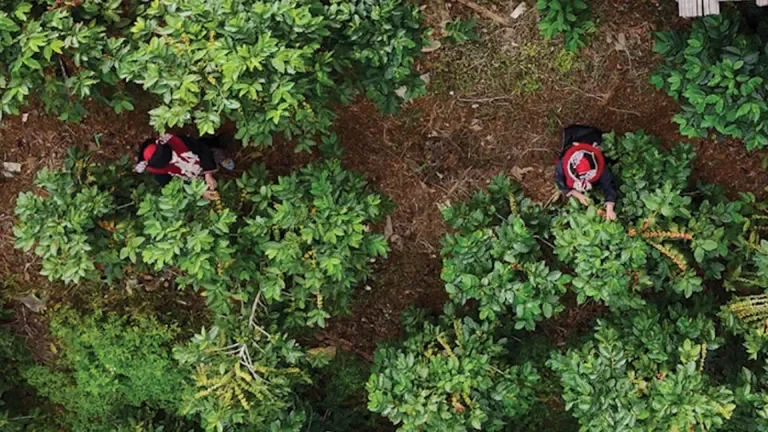
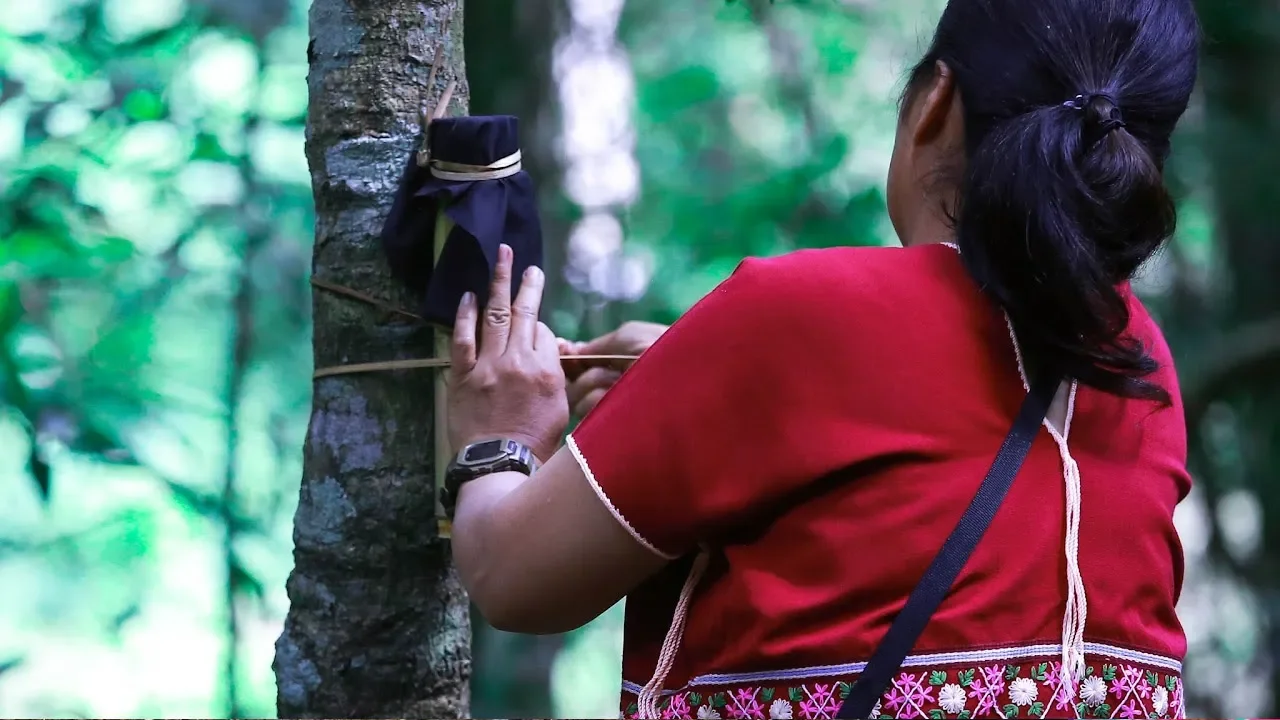
![An Indigenous Karen Thai woman with dark hair tied in a ponytail, wearing a red top with floral embroidery, attaches a black cloth tied with a rubber band to a tree in a forest.]()
Free Prior and Informed Consent (FPIC) completed by all partners
Indigenous knowledge integrated into 10 schools, reaching 150+ children through elder-led teaching, camps, and biodiversity modules.
-
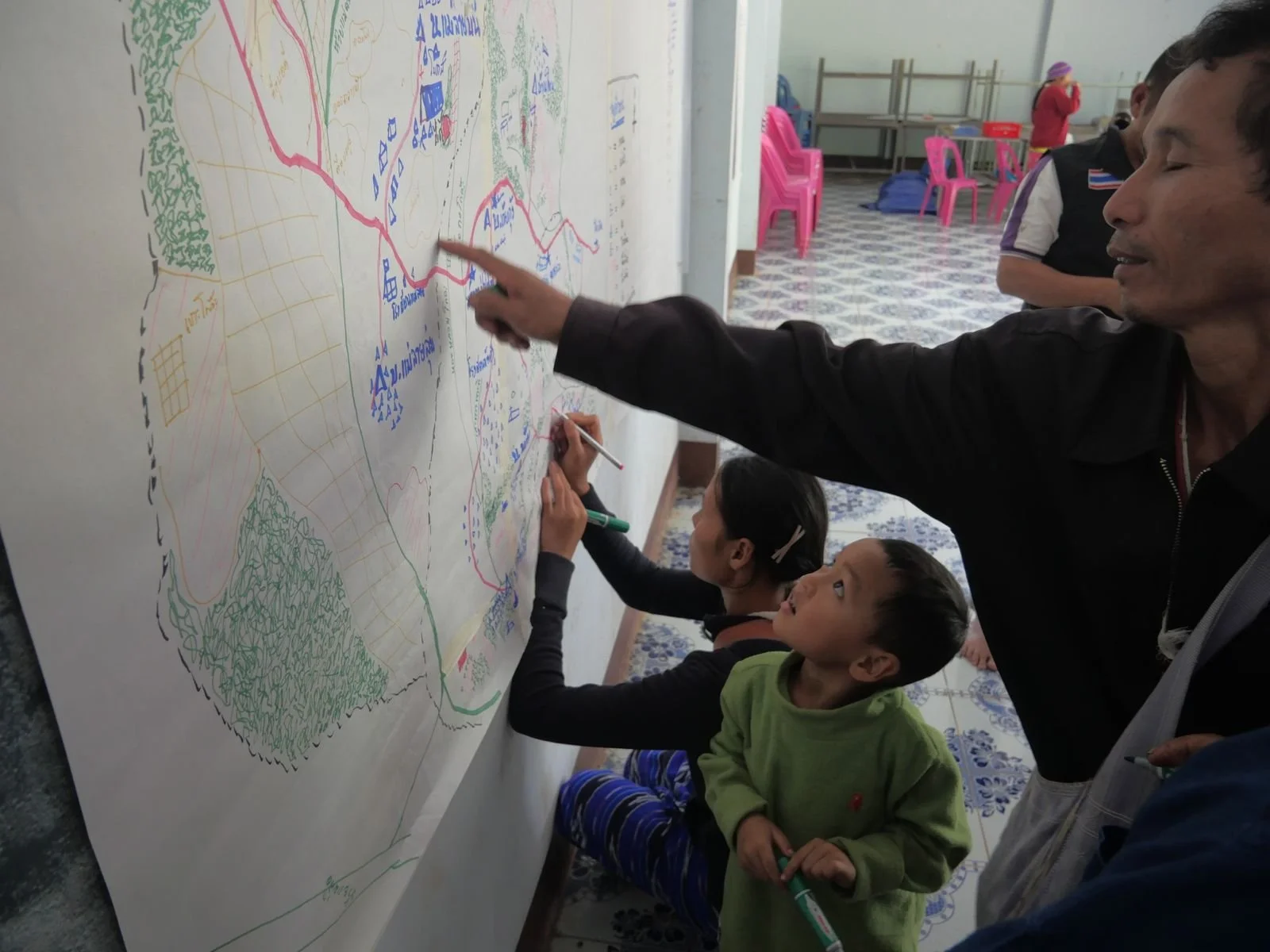
![People, including children and an adult man, drawing and explaining a colorful map or diagram on a large whiteboard or paper, in a room with tiled floor and pink plastic chairs in the background.]()
Natural Resource Management (NRBM) advanced in 86 communities
across 11 sub-watersheds, with biodiversity workshops, validated watershed plans, and ritual-based conservation actions.
-
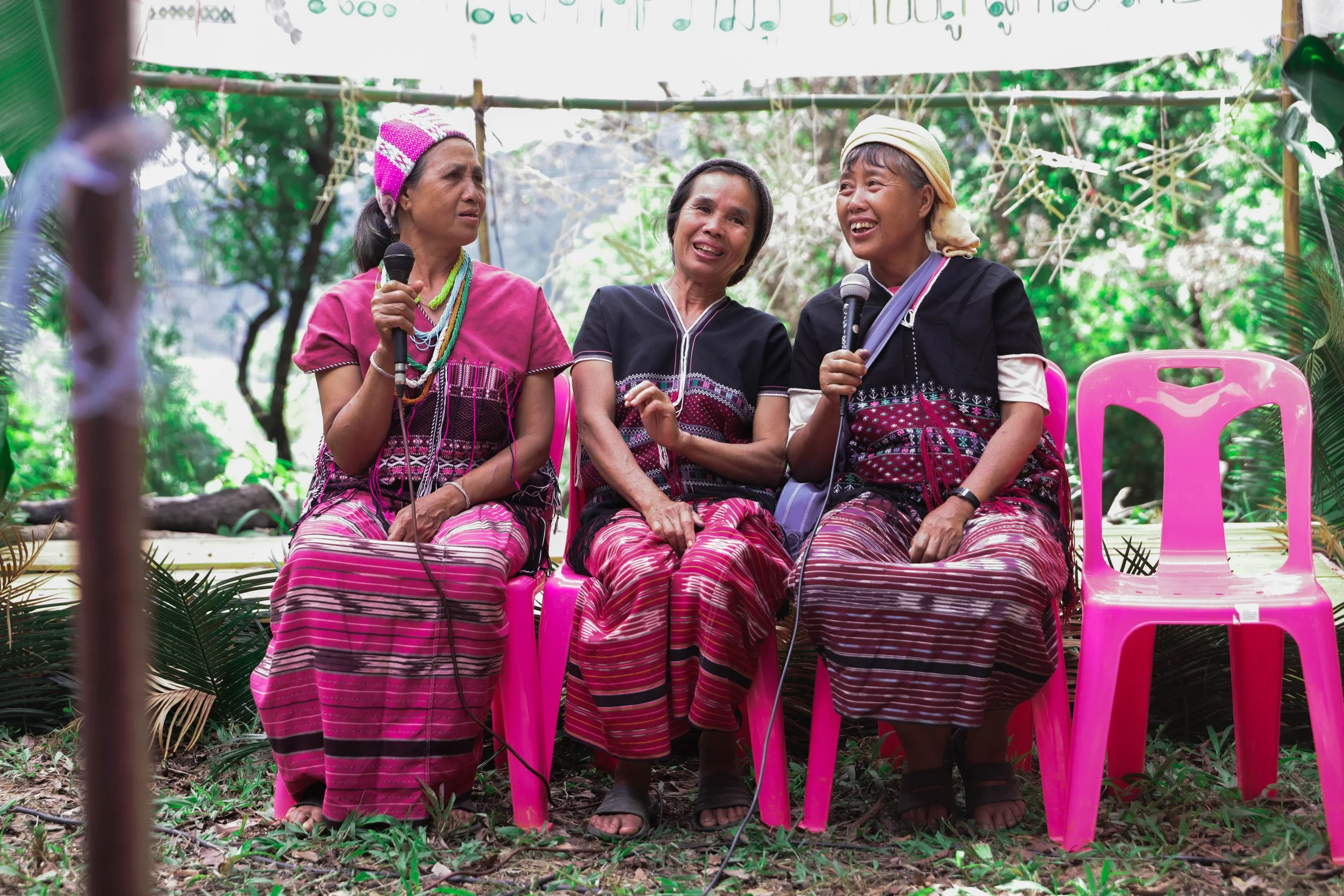
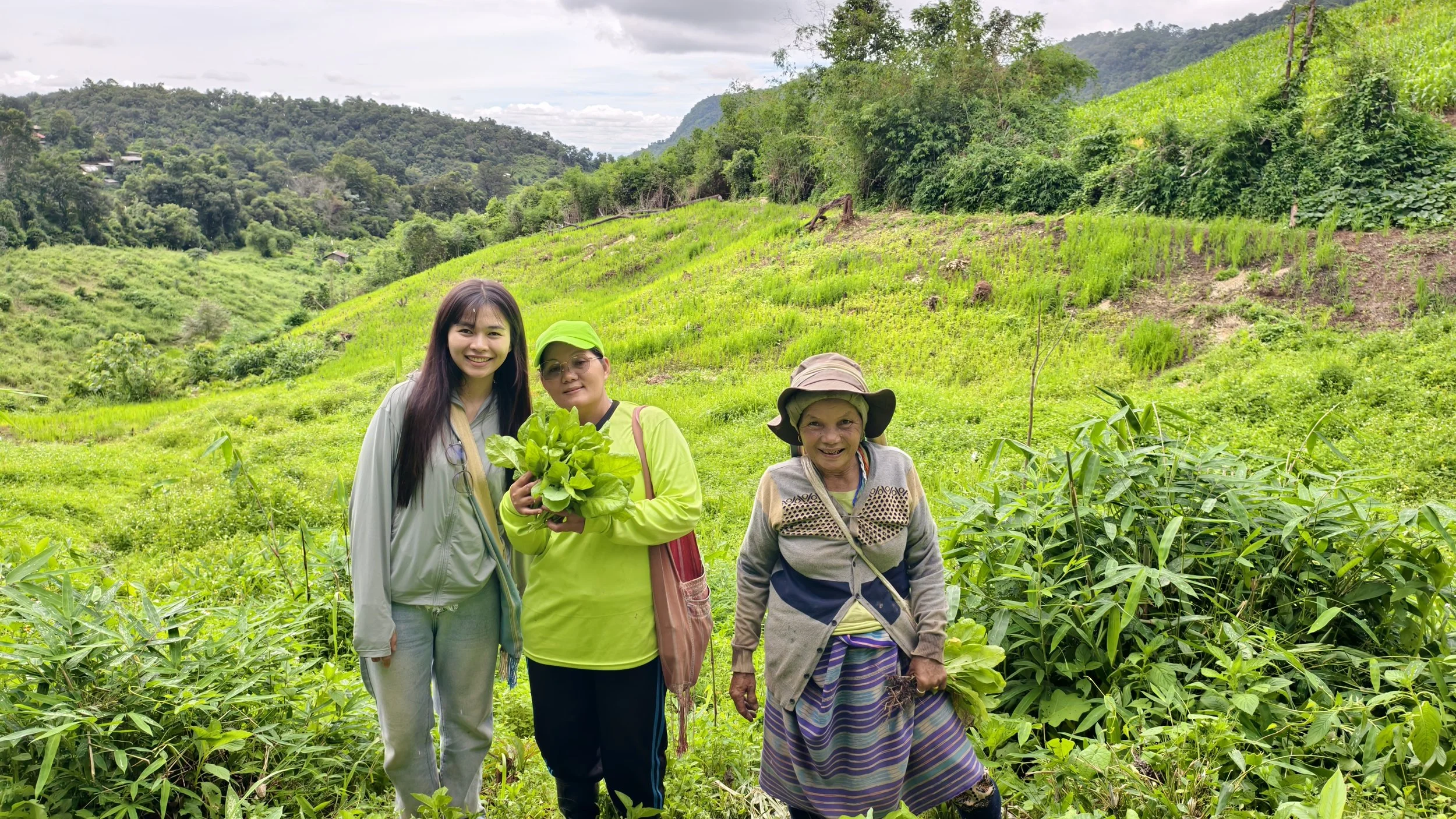
![Three Indigenous Thai women in traditional clothing sitting on pink plastic chairs outdoors, holding microphones, surrounded by greenery and decorations.]()
Customary land and cultural zone maps updated in Mae Hong Son with community and LAO participation
progress toward local ordinances and special cultural zone recognition.
-
![]()
Multiple youth camps and intergenerational dialogues conducted
strengthening Indigenous ecological knowledge transmission.
-
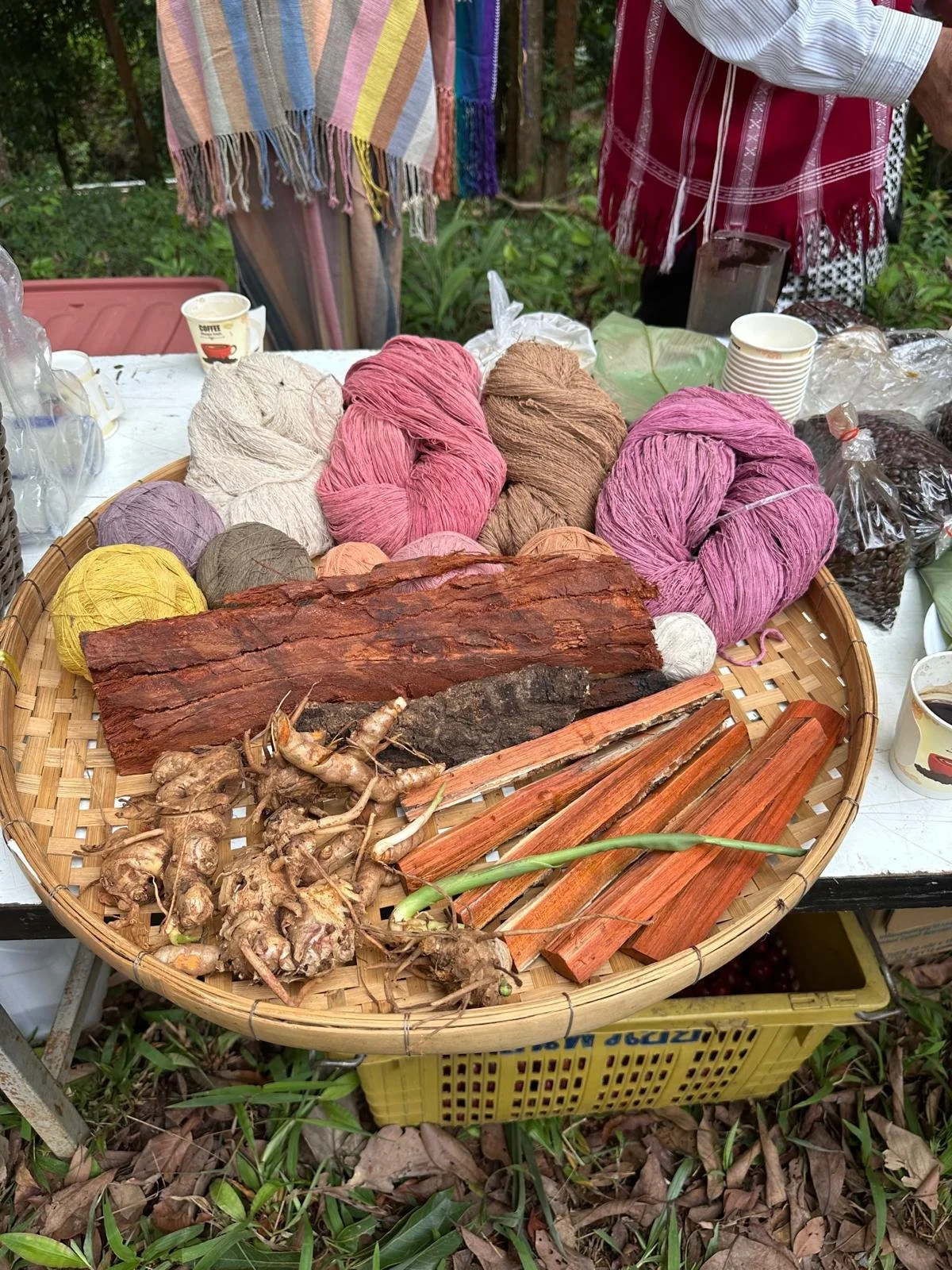
![Basket filled with various herbs, spices, and sticks, along with yarn balls in different colors, set on a table at an outdoor market, representing Indigenous Thai livelihoods that are dependent on nature.]()
3 articles, 3 short videos, advocacy clips produced
website launched; 7 Indigenous networks supported for policy dialogue and planning.
-
![]()
Continued support for firebreak maintenance
tree planting, and adaptation planning integrating Indigenous and scientific knowledge.
Explore Related News from IPF-Thailand

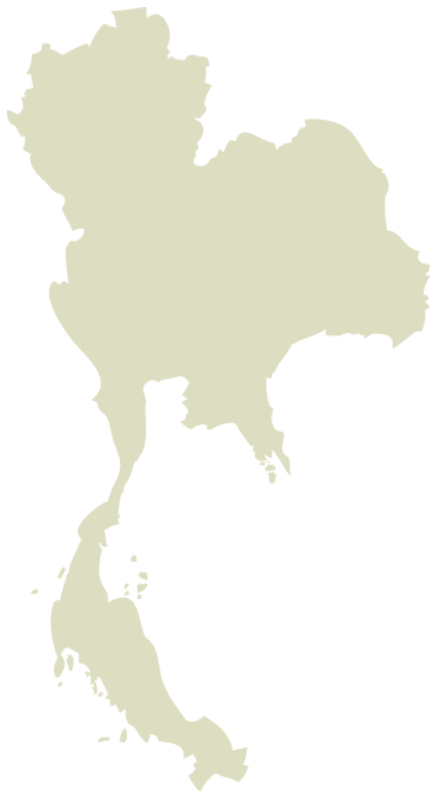
The Region
Approximate area in hectares:
115,874
Indigenous Karen; Hmong; Lahu; Iu Mien; Akha; Mani population:
25,363
The total landmass of Thailand is 51.12 million hectares, including 25 principal watersheds and 16.35 million hectares of rainforest, which amounts to 31.86% of the country’s area. The area of the subproject includes two main landscapes in Northern Thailand and Southern Thailand. It covers 5 principal watersheds, 21 sub-watersheds, and 2 broad regions, north and south. The total project area is 289,684 hectares.
These areas have significant importance with respect to biodiversity, reduction of greenhouse gas emission, and are rich in natural resources needed by the Indigenous groups for their sustenance and livelihood. The geographical areas included in this project have a relatively healthy forest. In some places, the forests are 70% healthy with regard to forest cover and wildlife diversity, such as upper Khun Tae, Mae Pae, Mae Yod, Mae Lai, Huay Mae Lid and Mae Lan Kham watersheds. Studies and surveys of biodiversity by IMPECT over 320 hectares during 2016 to 2019 in Mae Tae village show that the conservation area remains biologically healthy. It also showed the appearance of the rare Rafflesia plant and more than 27 types of vines among 60 varieties of plants, and the tracks of 25 forest animal breeds. The Pgakeunyaw Association for Sustainable Development [PASD] found more than 111 species in Mae Yod community.
The subproject area encompasses 86 communities of 8 ethnic groups in Thailand, namely, Karen, Hmong, Lisu, Lahu, Iu Mien, Akha, Laweu and Mani. Thailand’s legal framework allows for some recognition of IPLC use of lands (community title) and forests (community forests). According to Landmark, there is no data on the total area claimed by IPLCs. Many protected areas have been established despite the presence of IPLCs within such areas. Indigenous peoples have not been recognized for many years in Thailand, they have been considered as “wards of the king,” not as full citizens. This is slowly changing, for example with the government supporting cultural activities during International Day of Indigenous Peoples. People rely on forests as an important resource base for community food production, for example, the collection of forest mushrooms, gardens and orchards, and wet and dry rice cultivation, provides food and income to inhabitants. However, rotational agriculture practices used by IPs and LCs have been used as a reason to evict them from their territories, claiming that these practices destroy forests and contribute to climate change. In the south, the 12 Mani communities are hunter-gatherers and their culture and lifestyle differs from other ethnic groups. The Mani communities do not accumulate food for future consumption and, thus, they are more mobile and use wider areas in comparison to the agriculture-based communities.
About Thailand
Percentage of the country’s land area under recognized IP or LC ownership:
<1%
(Source: RRI: 2015. Who Owns the World’s Land?)
Number of Land Defenders Killed 2016-2018:
1
(Source: Global Witness)
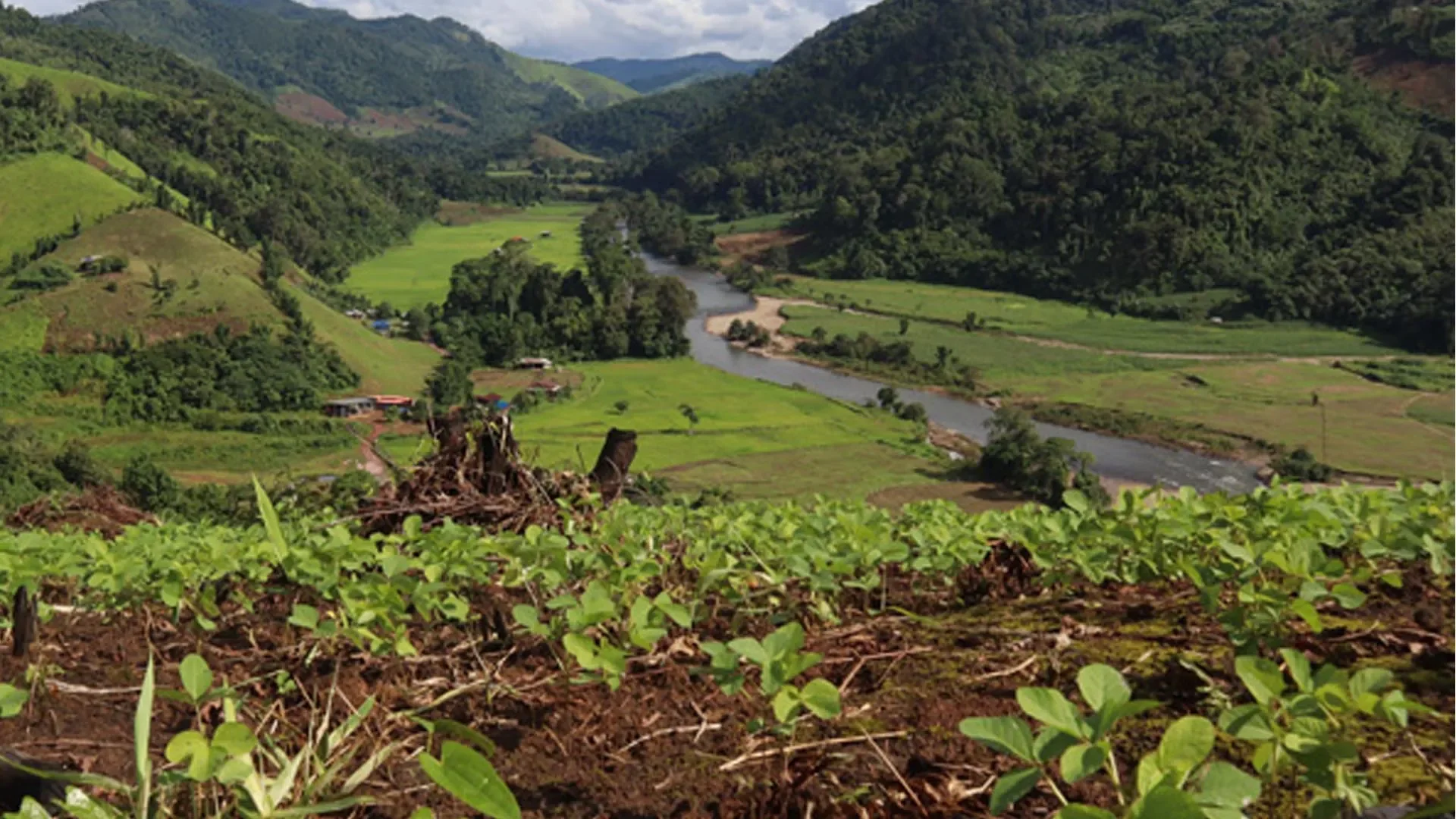
Biodiversity Significance
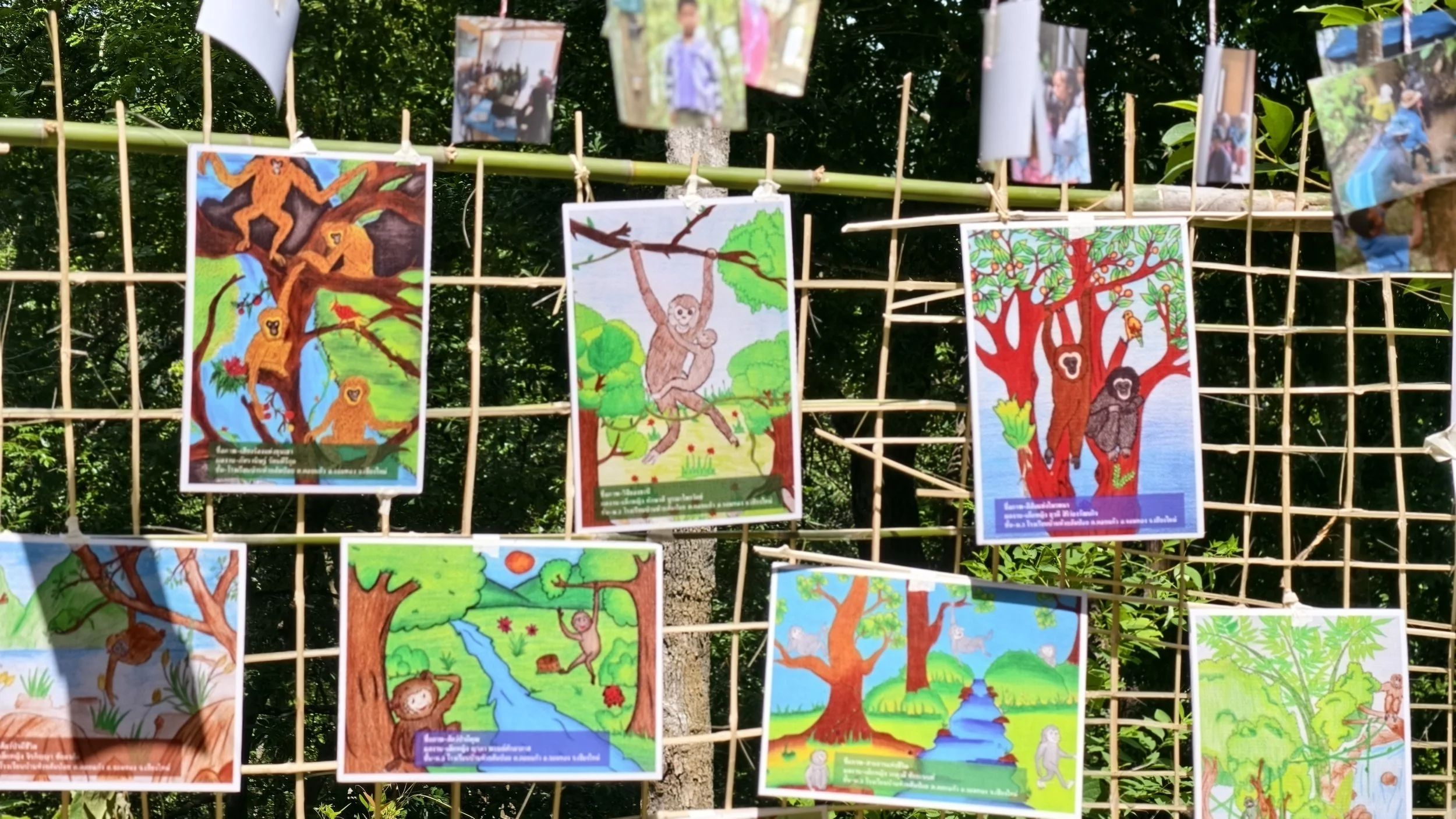
Local Context
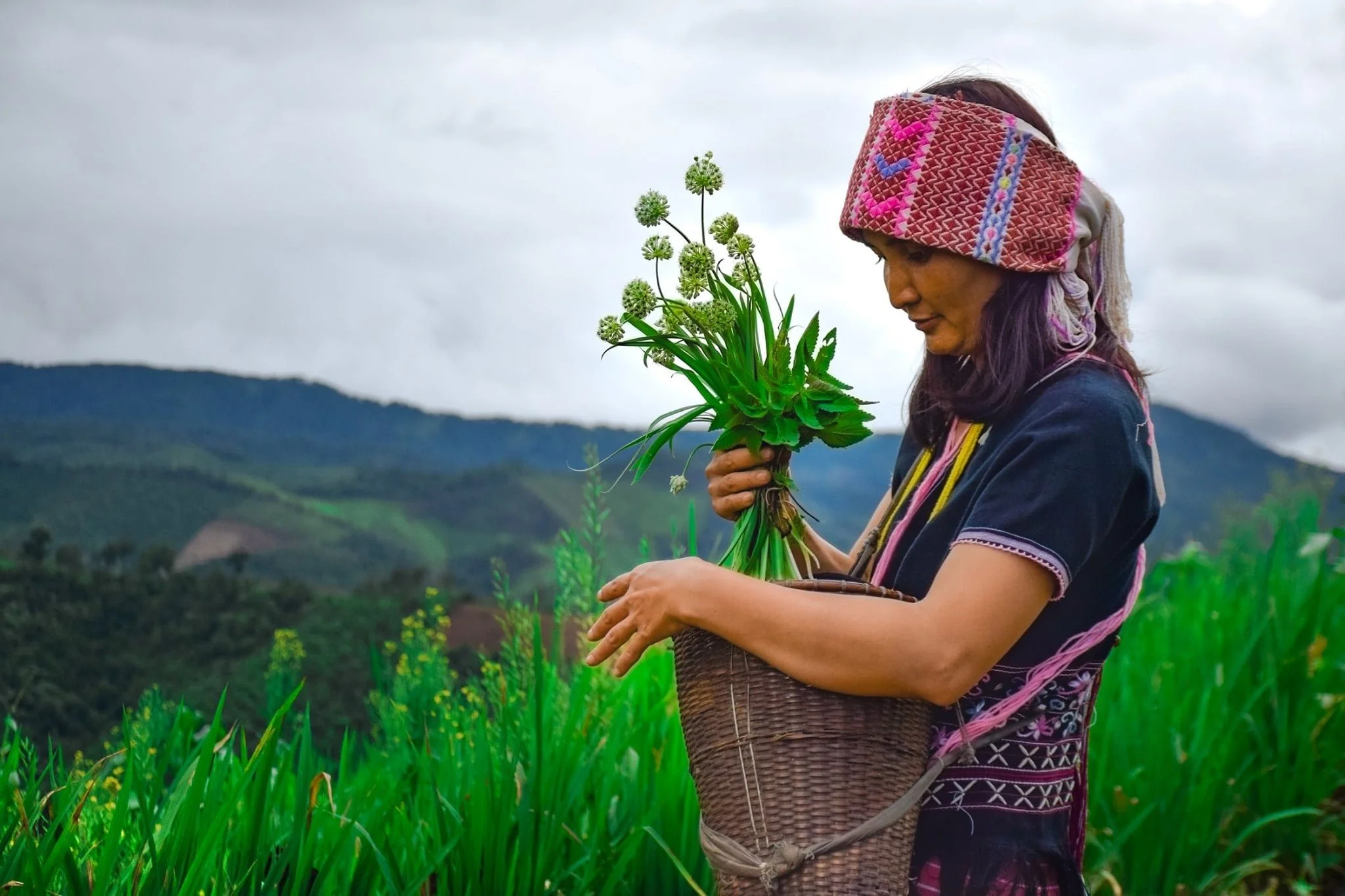
-
Agriculture
Livestock
Agroforestry
Non-timber Forest Products (NTFPs)
Tourism
Fishing
Hunting
-
Agricultural expansion and commercialization
Deforestation, overgrazing, and overexploitation of wildlife and other natural resources
National and Regional Policies and Plans linked to tenure security
Loss of Indigenous knowledge
Globalization, integration into market economy, influence of Western culture, lack of recognition of traditional systems