
Southwest Amazon
Defending the collective will of Indigenous Peoples
About
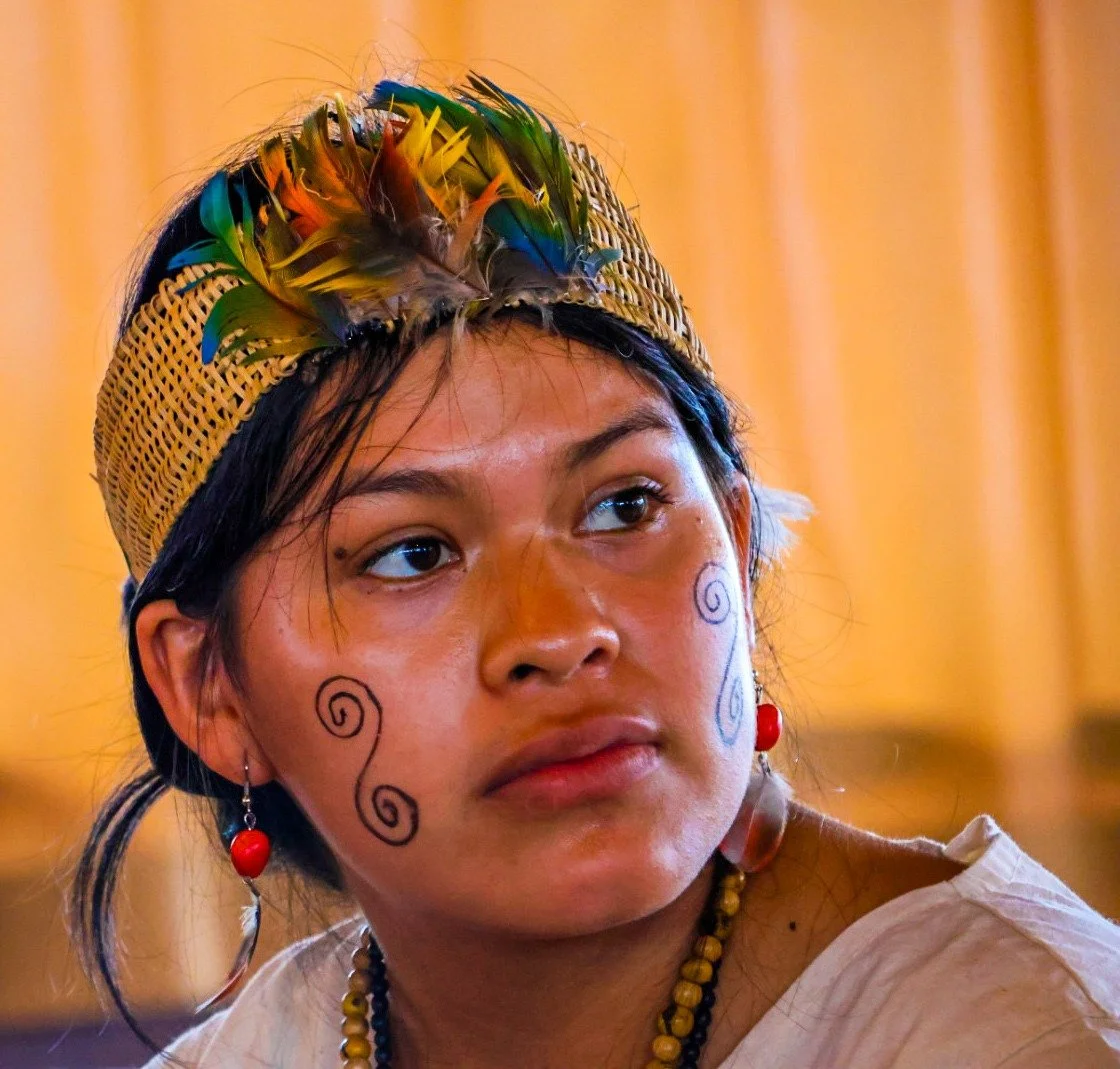
In the Madre de Dios River basin in Peru, an ancestral tropical forest territory home to several Indigenous communities, the Native Federation of Madre de Dios River and Tributaries (FENAMAD) is advocating to legitimately represent and defend the collective will of all Indigenous Peoples of Madre de Dios, including those living in isolation and initial contact.
Under this initiative, ICI is strengthening conservation management across 3,748,946 hectares in Peru, engaging 5,505 direct project stakeholders.
Led by
Federación Nativa del Río Madre de Dios y Afluentes
Key ICI achievements in the Southwest Amazon
-
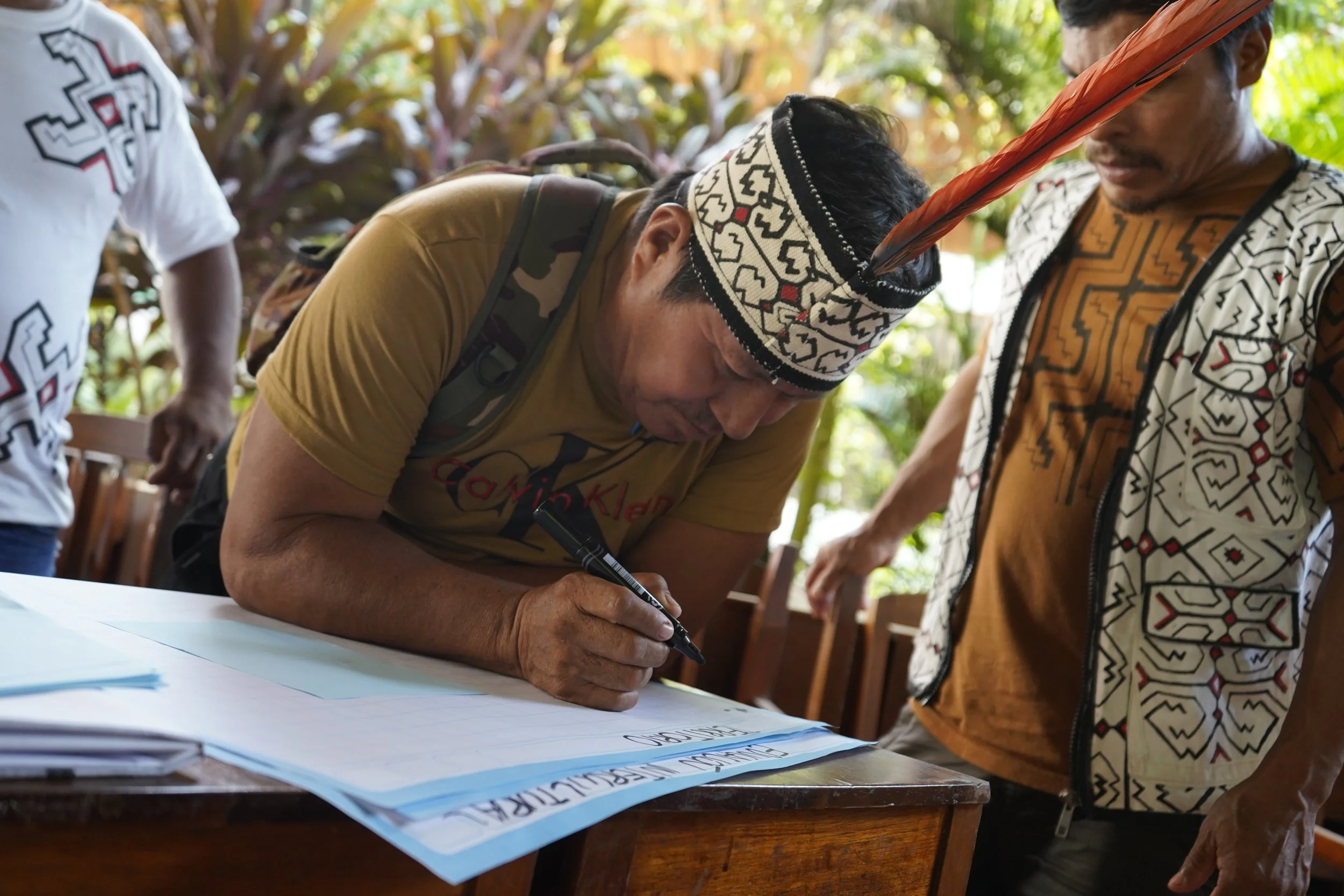
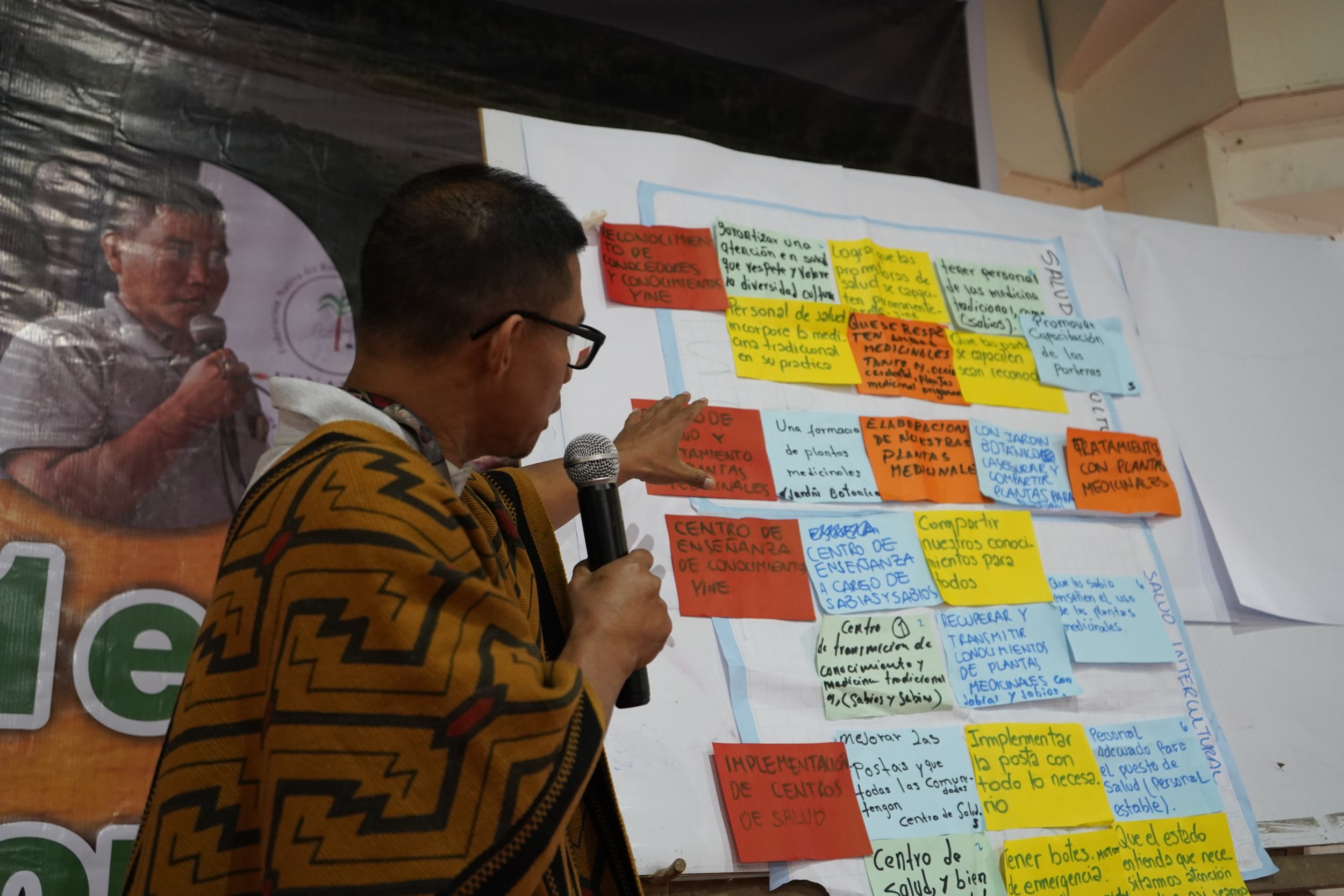
![An Indigenous man from the Southwest Amazon in Peru is pointing at a colorful poster filled with handwritten notes on a board during a presentation or workshop.]()
Development of Yine and Ese Eja life plans with 13 communities
that document the living history of their territories through intergenerational dialogue between elders and youth, strengthening self-determination and reinforcing recognition of these areas as ancestral territories.
-
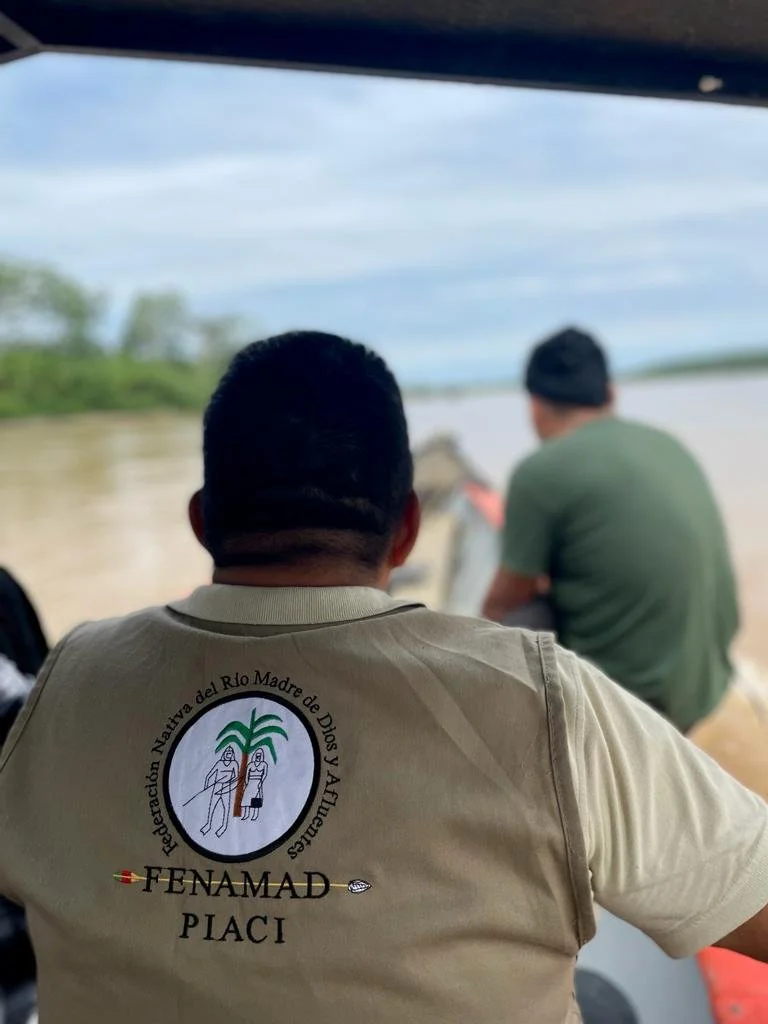
![Indigenous People in a boat, with the back of a person wearing a beige shirt with a logo and text that reads 'FENAMAD PLACI', overlooking a river with trees on the far bank in the Southwest Amazon in Peru.]()
Launched a community health and environmental monitoring program in the Peruvian Amazon with 10 Yine communities
supporting Indigenous youth and leaders to collect biological and environmental samples to assess mercury exposure and develop locally led solutions to address contamination, including the restoration of areas degraded by gold mining.
-
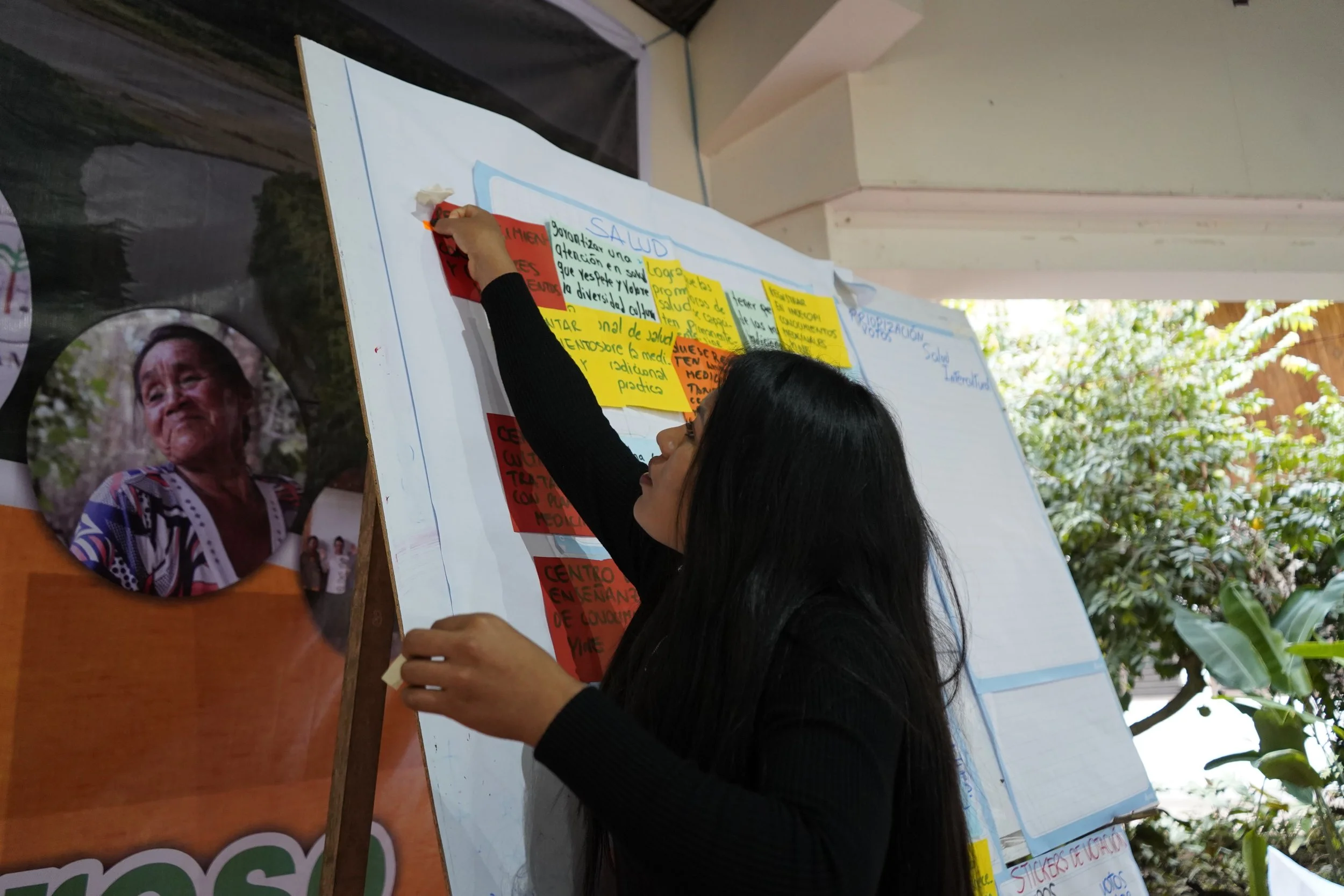
![An Indigenous woman from the Southwest Amazon in Peru with long black hair posts yellow and red sticky notes on a large white board with handwritten text. She is indoors, with a poster showing a woman with a serious expression and trees visible.]()
Established FENAMAD’s Women’s Committee
developed the Institutional Plan for Women, advanced the implementation of the Women’s Agenda, and adopted a gender-based violence (GBV) protocol to prevent and respond to GBV.
Explore Related News from FENAMAD

The Region
Approximate area in hectares:
7,497,911
Indigenous Mashco Piro (Arawak); Matsigenka; Harakbut; Yine; Ese Eja population:
5,505
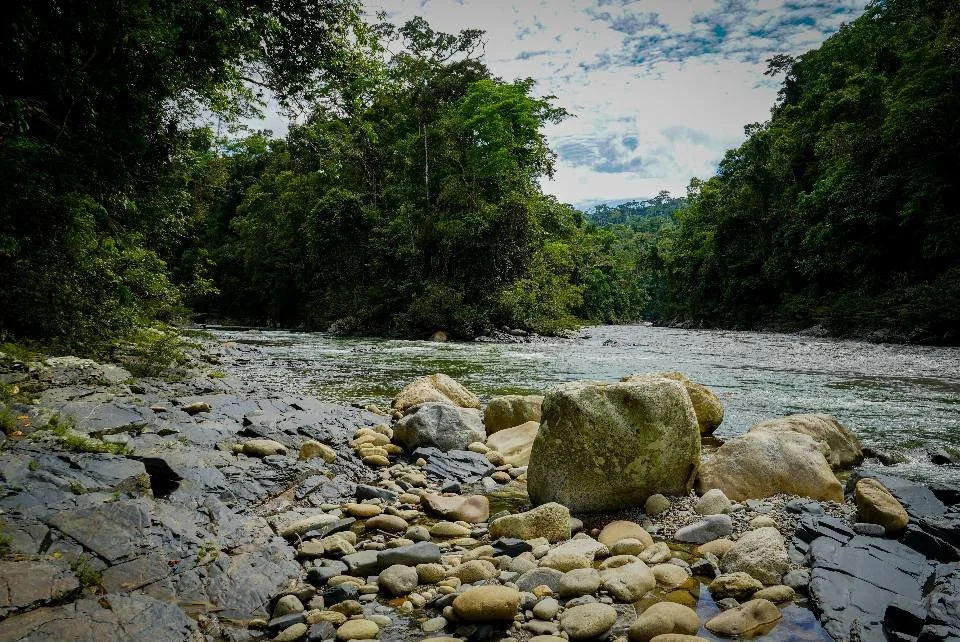
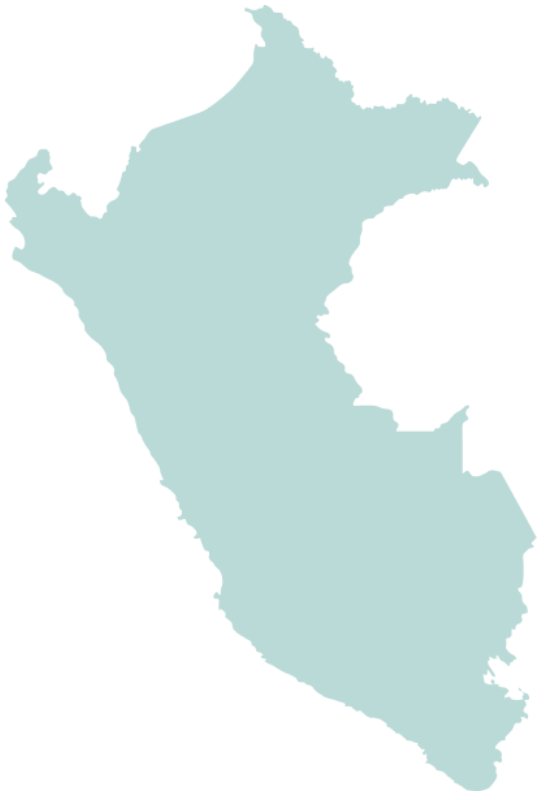
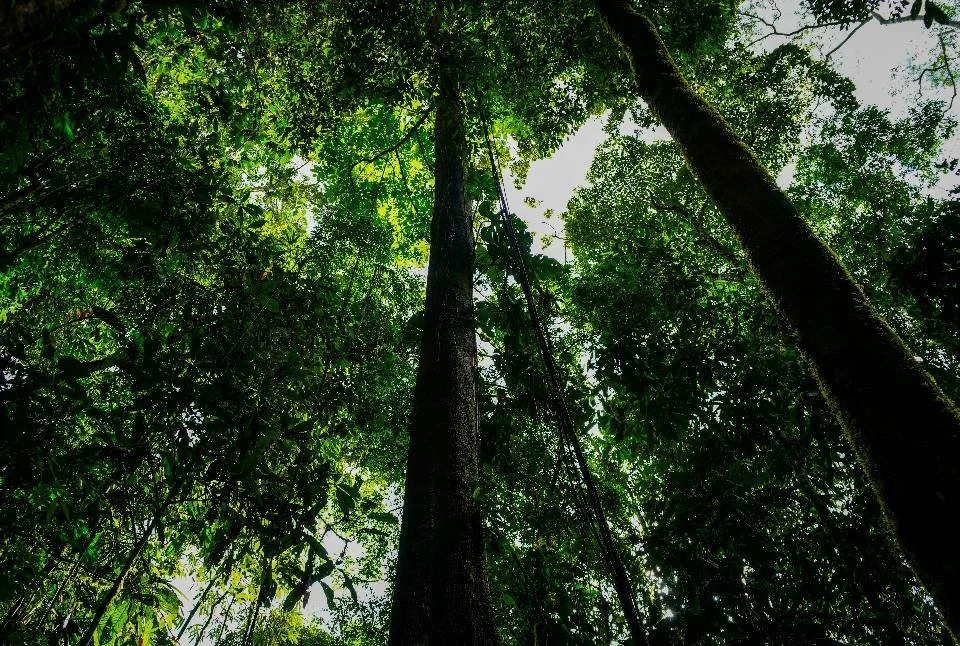
This initiative’s geography is in the Peruvian portion of the Southwest Amazon. It is part of the Amazon biome and is located in the large basins of the Madre de Dios, Beni and Mamoré rivers. It comprises three large ecological areas: the sub-Andean mountain ranges, the foothills of the Andean Cordillera, and the extensive Amazon alluvial plain. The altitudinal gradient ranges from 250 meters to 4,000 meters above sea level, with precipitation ranges between 1,500 and 6,000 and mm/year, which give it a high degree of ecological fragility. This produces a mosaic of extraordinarily rich tropical rainwater ecosystems. The protected areas in this initiative’s area (Manu, Amarakaeri, Bahuaja-Sonene and Tambopata) are part of the Vilcabamba-Amboró Conservation Corridor, and are recognized as among the most biologically rich hotspots on the planet. The area contains about 70% of the biodiversity of Peru, including a high number of endemic species of flora and fauna. It is extraordinarily important for the maintenance of ecosystem services of enormous local, regional and global value, including provision of natural resources (timber, NTFPs wildlife, etc.), carbon sequestration, and watershed regulation.
The area includes 4 Indigenous groups, including groups in isolation and initial contact. On the Peruvian side of the Madre de Dios River basin, there are weaknesses and limitations to the legal recognition of the right to territory of Indigenous peoples – since in the absence of specific figures in accordance with international standards – they have been categorized as Native Communities, protected areas, and others, which do not recognize their integrity or guarantee ownership. This context allows for the granting of rights to third parties, limiting the exercise of self-determination and self-management, and generating conflicts between communities and external actors. The initiative’s area includes part of the territory of the Mashco Piro people in isolation, and contributes to the protection of a cross-border area in Peru and Brazil of more than 8 million hectares, known as the PIACI Pano Arawak Territorial Corridor. Conservation models focused on rights, identity and territorial claims have gained momentum as a result of the formation of four ethnic organizations, representing four peoples: the Ese Eja Nation (2013), the Harakbut Nation (2016), the Matsigenka People of Manu National Park (2017) and the Yine Nation (2018). These new organizational forms emerged, driven by, and in articulation with, existing multi-ethnic organizations.
FENAMAD and its intermediate organizations assert the ethnic identity of their members and seek to consolidate and formalize themselves as interlocutors with the Peruvian State in larger territories that include highly biodiverse protected areas (Manu, Amarakaeri, Bahuaja-Sonene, Tambopata), and to actively participate in their conservation and governance. Thus, presents a dynamic context for organizational trajectories and evolving political and normative frameworks in which Indigenous territorial rights are defined.
About the Southwest Amazon
Percentage of the country’s land area under recognized IP or LC ownership:
34%
(Source: RRI: 2015. Who Owns the World’s Land?)
Number of Land Defenders Killed 2016-2018:
10
(Source: Global Witness)
Biodiversity Significance
Local Context
-
Agriculture
Agroforestry
Non-timber Forest Products (NTFPs)
Tourism
Fishing
Hunting
Payments for Ecosystem Services
Handicrafts
-
Agricultural expansion and commercialization
Climate change
National and Regional Policies and Plans linked to tenure security
Loss of Indigenous knowledge
Mining
Infrastructure development (e.g. roads, railways, pipelines, transmission lines, wind farms, geothermal projects, airports, dams)
Globalization, integration into market economy, influence of Western culture, lack of recognition of traditional systems
Tourism Hydroelectric mega-dams
Illegal logging
Hydrocarbon Activity
Drug trafficking
Large-scale livestock production
Poaching – wildlife trafficking
Human-wildlife conflict